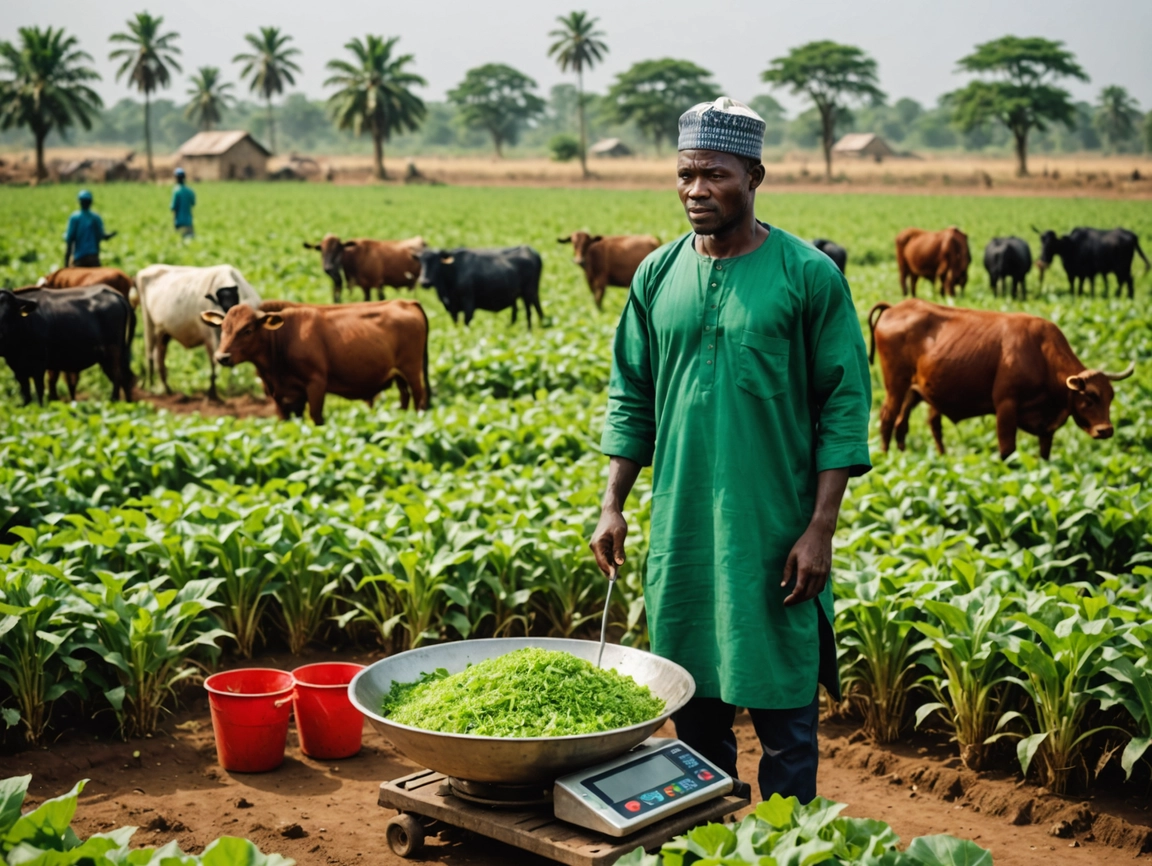
The rhythmic hum of a generator, the scent of fertile earth, and the vibrant tapestry of growing crops – these are familiar elements of Nigerian farming. But beneath this traditional exterior, a quiet revolution is taking place, driven by the increasing adoption of technology. Among these innovations, the digital scale stands as an unsung hero, poised to transform efficiency, accuracy, and profitability for countless agricultural enterprises.
Understanding the Importance of Digital Scales in Nigerian Farming
For generations, Nigerian farmers have relied on intuition, experience, and often, rudimentary methods for weighing their produce, livestock, and inputs. While impressive in their resilience, these traditional approaches are increasingly insufficient in a competitive and demanding market. This is where the digital scale steps in, offering a leap forward in precision and reliability.
Enhancing Accuracy in Crop Yield Measurement
Imagine a scenario where a farmer painstakingly cultivates a bounty of yams, only to estimate their weight using a manual spring scale or even by eye. The potential for error is significant, leading to inaccurate sales figures, poor planning for the next planting season, and ultimately, reduced income. A digital scale, with its precise digital readout, eliminates this guesswork. It provides accurate measurements of harvests, enabling farmers to know exactly how much they produced, track yield per plot, and make data-driven decisions for future cultivation. This accuracy translates directly into better inventory management and more equitable transactions with buyers.
Optimizing Livestock Management
In the bustling livestock markets of Nigeria, every kilogram matters. Whether it’s poultry, goats, sheep, or cattle, accurately weighing animals is critical for buying, selling, and monitoring their health and growth. Traditional methods often involve estimation, leading to disputes and financial losses. Digital scales designed for livestock, with their robust construction and larger platforms, offer precise weight measurements. This allows farmers to:
- Monitor animal weight gain, indicating healthy growth or potential health issues.
- Accurately price animals for sale, ensuring fair market value.
- Optimize feed rations based on individual animal weight, reducing waste and improving feed conversion.
- Track the effectiveness of breeding programs by monitoring the weight of offspring.
Ensuring Fair Transactions and Preventing Losses
Disputes over weight are a common occurrence in many agricultural supply chains. Buyers might claim a lower weight than delivered, leading to financial losses for the farmer. By using a certified and regularly calibrated digital scale, farmers can confidently present accurate weight figures, establishing transparency and building trust with buyers. This significantly reduces the likelihood of fraudulent practices and ensures farmers receive the full value for their hard work. Furthermore, by precisely measuring inputs like fertilizers, seeds, and animal feed, farmers can avoid under- or over-application, leading to more efficient resource utilization and minimizing preventable losses.
Factors to Consider When Choosing a Digital Scale for Your Nigerian Farm
Selecting the right digital scale is not a one-size-fits-all endeavor. The diverse needs of Nigerian farms necessitate careful consideration of several key factors to ensure the chosen scale is a valuable and long-lasting asset.
Capacity and Readability
The maximum weight the scale can measure (capacity) and the smallest unit of measurement it can display (readability) are fundamental considerations. For weighing sacks of grains or vegetables, a scale with a capacity of 100-200 kg might suffice. However, for livestock, a scale capable of handling several hundred kilograms or even a ton would be necessary. Readability is equally important. While weighing large quantities, a readability of 100g or 200g might be acceptable, but for precious produce or precise input measurements, a readability of 10g or 1g could be crucial. It’s essential to match these specifications to the specific items being weighed most frequently.
Durability and Construction Materials
Nigerian farm environments can be harsh, characterized by dust, moisture, varying temperatures, and rough handling. Therefore, the durability of the digital scale is paramount. Look for scales constructed from robust materials like heavy-duty stainless steel or tough, impact-resistant plastic. Water-resistant or waterproof casings are highly desirable, especially for outdoor use or in areas prone to dampness. The platform itself should be strong enough to withstand the weight of the intended items without bending or cracking.
Power Source and Portability
The availability of consistent electricity can be a challenge in many rural areas of Nigeria. Thus, the power source of the digital scale is a critical factor. Battery-operated scales offer excellent portability and independence from power outlets, making them ideal for field use or remote locations. However, consider the battery life and the availability of replacement batteries. Scales with rechargeable batteries are a good compromise. For stationary use, a scale with an AC adapter is perfectly suitable. Additionally, if the scale needs to be moved frequently between different areas of the farm or to market, its weight and overall design for easy transport should be considered.
Accuracy and Calibration Features
While all digital scales are designed for accuracy, the level of precision can vary. Look for scales that offer high accuracy ratings and come with readily available calibration weights or instructions for calibration. The ability to easily calibrate the scale regularly is vital to maintain its precision over time. A scale that allows for user calibration without specialized tools is a significant advantage, empowering farmers to ensure their measurements are always reliable.
Price and Warranty
Cost is almost always a driving factor in purchasing decisions. While it’s tempting to opt for the cheapest option, it’s crucial to balance price with features and durability. A seemingly inexpensive scale that breaks down frequently will end up being more costly in the long run due to replacement costs and downtime. Investing in a slightly more expensive but robust and reliable scale can prove to be more economical. Furthermore, always inquire about the warranty offered by the manufacturer or seller. A good warranty provides peace of mind and indicates the manufacturer’s confidence in their product.
Types of Digital Scales Suitable for Nigerian Farming
The diverse agricultural landscape of Nigeria demands a range of digital scale types, each optimized for specific tasks.
Platform Scales
These are perhaps the most common and versatile digital scales found in agricultural settings. Platform scales feature a flat, often square or rectangular, weighing surface. They are ideal for weighing sacks of produce like grains, tubers, and vegetables, as well as boxes of fruit or other packaged goods. Their robust construction allows them to handle significant weight, and their low profile makes loading and unloading relatively easy. Many platform scales come with a separate digital display connected by a cable, allowing the farmer to place the display at eye level for easy reading.
Crane Scales (Hanging Scales)
For weighing large, unwieldy items that are difficult to place on a platform, such as large animal carcasses, bales of hay, or even multiple sacks at once suspended from a hoist, crane scales are invaluable. These scales feature a hook at the bottom for attaching the item and a sturdy loop at the top for suspending the scale from a crane, chain block, or even a strong beam. Their compact design and often high capacity make them incredibly useful for specific heavy-duty applications.
Livestock Scales
Designed specifically for weighing live animals, livestock scales feature large, sturdy platforms, often with non-slip surfaces and sometimes even side barriers to keep animals contained during weighing. They are built to withstand the movement and weight of animals, from small poultry to large cattle. Some advanced livestock scales incorporate motion-sensing technology to compensate for animal movement, providing a more stable and accurate reading. These scales are crucial for managing animal health, optimizing feed, and ensuring fair prices in livestock transactions.
Small Bench Scales (Precision Balances)
While not for bulk weighing, small bench scales or precision balances play a vital role in certain aspects of farming. They are essential for accurately measuring small quantities of inputs, such as:
- Seeds for precise planting.
- Pesticides and herbicides for accurate dilution and application.
- Fertilizer supplements for targeted nutrient delivery.
- Small samples of produce for quality control or germination testing.
These scales offer high readability (often down to 0.1g or 0.01g) and are crucial for optimizing resource use and preventing costly errors in delicate agricultural processes.
Top Features to Look for in a Digital Scale for Nigerian Farming
| Feature | Description |
|---|---|
| Accuracy | The scale should provide precise and accurate measurements to ensure the correct amount of feed, fertilizer, or produce is being used or sold. |
| Capacity | It should have a sufficient capacity to handle the weight of farm produce, livestock, or other materials commonly used in Nigerian farming. |
| Portability | Portability is important for ease of use and convenience, especially in rural or remote farming areas. |
| Power Source | Consider whether the scale operates on batteries, electricity, or solar power, taking into account the availability of power sources in Nigerian farming settings. |
| Unit Conversion | The ability to switch between different units of measurement, such as kilograms, pounds, or grams, can be useful for diverse farming needs. |
| Durability | The scale should be built to withstand the rigors of farm use, including exposure to dust, moisture, and rough handling. |
Beyond the basic considerations, certain features can significantly enhance the utility and longevity of a digital scale in Nigerian farming.
Large, Backlit Display
Visibility is key, especially when working outdoors in varying light conditions or indoors in dimly lit storage areas. A large, clear, and backlit LCD or LED display ensures that weight readings are easily visible, reducing errors and improving efficiency. This is particularly important when multiple workers are involved or when readings need to be taken rapidly.
Tare Function
The tare function is incredibly useful and almost indispensable. It allows the user to zero out the weight of a container (like a basket, sack, or bucket) before adding the product to be weighed. This ensures that only the net weight of the actual produce or item is measured, streamlining the weighing process and preventing manual calculations that can introduce errors.
Hold Function
For weighing commodities that are unstable or animals that move, a hold function can be invaluable. This feature temporarily locks the weight reading on the display once it has stabilized, even if the item is subsequently removed or moves. This allows the farmer to record the reading at their convenience without having to constantly watch the display.
Units Conversion
The ability to switch between different units of measurement (e.g., kilograms, pounds, grams) is a practical feature, especially when dealing with various buyers or markets that might use different standards. This flexibility enhances the scale’s adaptability and convenience.
Overload Protection and Auto Shut-off
Overload protection is a safety feature that prevents damage to the scale if an item exceeding its capacity is placed on it. This extends the lifespan of the scale. An auto shut-off feature, on the other hand, conserves battery life by automatically turning off the scale after a period of inactivity, which is particularly beneficial for battery-powered models.
Connectivity Options (e.g., USB, Bluetooth)
While not essential for every farm, for larger operations or those embracing digital record-keeping, connectivity options like USB or Bluetooth can be highly advantageous. These features allow the scale to connect to a computer or smartphone, enabling automatic recording of weight data, integration with inventory management software, and easier tracking of production statistics. This can significantly reduce manual data entry errors and provide valuable insights for farm management.
How to Calibrate and Maintain Your Digital Scale for Optimal Performance
Even the most robust digital scale requires proper calibration and maintenance to deliver consistent accuracy and a long service life. Neglecting these aspects can lead to inaccurate measurements, financial losses, and premature equipment failure.
Regular Calibration Practices
Calibration is the process of adjusting a scale to ensure it measures accurately against a known standard. It’s not a one-time event; digital scales, especially those used frequently or in harsh environments, can drift over time.
- Frequency: The frequency of calibration depends on usage and the importance of precision. For daily use, weekly or bi-weekly calibration might be advisable. Less frequent use might permit monthly or quarterly checks. Always refer to the manufacturer’s recommendations.
- Calibration Weights: Use certified calibration weights that match the scale’s capacity. These weights are precisely manufactured to a known mass.
- Procedure: Most digital scales have a built-in calibration mode accessed via specific button combinations. Follow the manufacturer’s instructions meticulously. The process usually involves placing a known weight on the scale and allowing the scale to adjust its internal settings. If certified weights are unavailable, use readily available, consistently weighted items (e.g., unopened bags of sugar or rice, bricks of known weight) for rough checks, though these are not as precise as certified weights.
Cleaning and Storage Best Practices
A clean scale is a happy and accurate scale. Dust, dirt, moisture, and chemical residues can all interfere with a scale’s sensors and internal mechanisms.
- Routine Cleaning: Wipe down the platform and display regularly with a damp, soft cloth. Avoid abrasive cleaners or direct spraying of water on electrical components.
- Spillage: Immediately clean up any spills, especially corrosive substances like certain fertilizers or animal waste, to prevent damage to the scale’s surface and internal components.
- Protection: When not in use, store the scale in a dry, dust-free environment. If possible, use a protective cover to shield it from harsh elements, especially for outdoor or semi-outdoor scales.
- Temperature Control: Extreme temperatures can affect scale accuracy. Store and operate the scale within the manufacturer’s recommended temperature range. Avoid direct sunlight for prolonged periods.
- Battery Management: For battery-operated scales, remove batteries if the scale will not be used for an extended period to prevent leakage and damage. Ensure batteries are replaced once they show signs of weakening.
Troubleshooting Common Issues
While digital scales are generally reliable, occasional issues can arise. Knowing how to troubleshoot can save time and potential repair costs.
- Inaccurate Readings: First, check if the scale is on a stable, level surface. Uneven surfaces are a common cause of inaccuracy. Then, clean the scale thoroughly and attempt recalibration. Check for any physical obstructions beneath the platform.
- Display Errors: If the display shows unusual characters or “Err” messages, consult the user manual for specific error codes. Often, this can be related to overload, low battery, or a need for recalibration.
- No Power: Check the power connection or replace the batteries. Ensure the power switch is in the “on” position.
- Slow Readings: A dirty load cell or excessive vibration can sometimes lead to slow or unstable readings. Ensure the environment is stable, and the scale is clean.
Budget-Friendly Options for Digital Scales in Nigerian Farming
While sophisticated scales offer numerous features, it’s entirely possible to find reliable digital scales that won’t break the bank, allowing small and medium-scale Nigerian farmers to benefit from this technology.
Utilizing Manual and Hybrid Scales
For farmers with very limited budgets, manual spring scales are a traditional option. While less accurate, they are extremely durable and require no power. However, hybrid scales, which combine a robust mechanical platform with a digital readout, can offer a good balance. They often have a lower upfront cost than fully digital heavy-duty scales and provide better accuracy than purely manual options. These might draw power from batteries, offering flexibility.
Exploring Locally Made and Refurbished Scales
Nigeria’s burgeoning manufacturing sector is beginning to produce more locally assembled or manufactured digital scales. These can often be more affordable due to lower import duties and transportation costs. Look for reputable local suppliers who offer warranties and after-sales support. Another option is professionally refurbished scales. These have been inspected, repaired, and recalibrated, offering a more affordable entry point to higher-quality equipment, but ensure they come with a clear guarantee from a trusted vendor.
Group Purchasing and Community Resource Sharing
Farmers in a cooperative or a community can pool resources to purchase a higher-quality digital scale that can be shared among members. This not only makes a better quality scale accessible but also fosters community spirit and mutual support. Setting up a usage schedule and clear maintenance guidelines is crucial for such an arrangement. Government agricultural programs or NGOs might also offer subsidies or loan schemes for farmers looking to acquire essential equipment, including digital scales.
Tips for Making the Most of Your Digital Scale in Nigerian Farming Operations
Acquiring a digital scale is just the first step. To truly unlock its potential and maximize its value, farmers should integrate it strategically into their daily operations and embrace a data-driven approach.
Integrating with Record Keeping
The true power of accurate measurements lies in the data they provide. Rather than just taking a reading and forgetting it, farmers should meticulously record all weight measurements.
- Manual Logbooks: A simple notebook or ledger can be used to record harvest weights, livestock weights, and input usage. Include date, item weighed, weight, and any relevant notes.
- Digital Spreadsheets: For those comfortable with technology, using a smartphone or tablet to input data into a spreadsheet (e.g., Google Sheets, Excel) allows for easier analysis and tracking over time.
- Farm Management Apps: Several mobile applications are now available that can help farmers manage various aspects of their operations, including production and inventory. Integrating weight data into these apps can provide invaluable insights.
Training Staff and Promoting Proper Usage
A digital scale, however advanced, is only as good as the people operating it. Investing time in training farmhands and staff on the correct use, calibration, and maintenance of the scale is essential.
- Demonstrations: Conduct practical demonstrations on how to properly place items on the scale, use the tare function, and read the display.
- Safety Protocols: Emphasize safety guidelines, especially when weighing heavy items or live animals, to prevent accidents and damage to the scale.
- Maintenance Awareness: Educate staff on the importance of regular cleaning, proper storage, and reporting any issues immediately. This fosters a sense of ownership and responsibility.
Utilizing Data for Informed Decision-Making
The accumulated weight data is a treasure trove of information that can significantly improve farm management.
- Yield Analysis: By tracking harvest weights per plot and per season, farmers can identify high-performing areas or crop varieties, guiding future planting decisions.
- Feed Optimization: Precisely tracking animal weight gain against feed consumption allows for the optimization of feeding regimes, reducing waste and improving profitability.
- Inventory Management: Accurate weighing of inputs and outputs provides a clear picture of inventory levels, helping with purchase planning and reducing losses due to spoilage or theft.
- Market Intelligence: Consistent data on produce weights and sales can reveal trends in market demand and pricing, allowing farmers to make more informed decisions about when and where to sell their produce.
By embracing digital scales, Nigerian farmers can move beyond estimation, fostering greater transparency, efficiency, and ultimately, sustainable growth in their agricultural endeavors. The journey from traditional methods to data-driven farming promises a brighter, more profitable future for the nation’s vital agricultural sector.
Discover more from Transville Agro
Subscribe to get the latest posts sent to your email.