farms
Nigerian small-scale farmers face daily energy challenges that limit their productivity and income. Unreliable electricity makes it difficult to operate equipment, store produce, or process goods efficiently. But what if farmers could generate their power using resources they already have? This question points to practical solutions that are changing farming communities across Nigeria.
Renewable energy systems offer small-scale farmers a path to energy independence that fits their needs and budgets. Solar panels can power irrigation pumps and cold storage while farm waste becomes valuable fuel through biogas systems. These options don’t just solve immediate power problems—they create new income opportunities and strengthen local food production. The following chapters explore how farmers combine these technologies, finance their adoption, and prepare for future innovations that will make Nigerian farms more resilient and productive.
Solar-Powered Systems: Beyond Basic Electricity
Innovative Solar Applications Transforming Nigerian Farms
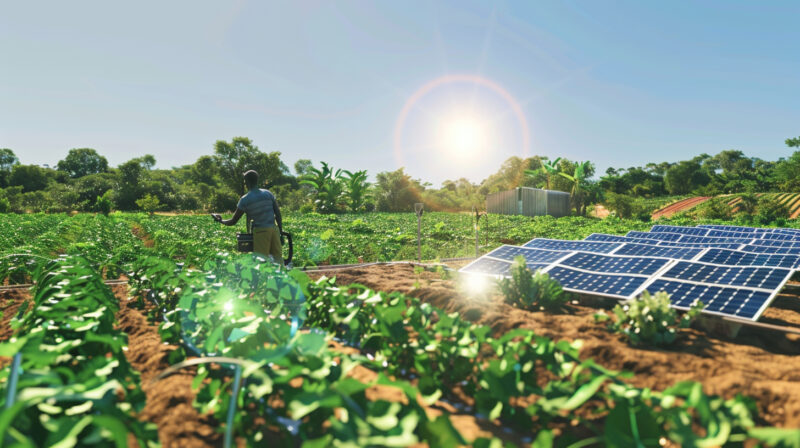
Solar power has evolved far beyond simply providing basic lighting for rural farms. Today, specialized agricultural appliances powered by solar energy are creating new possibilities for small-scale farmers across Nigeria. These technologies address specific farming challenges while operating independently from the national grid—a critical advantage in regions where the electricity supply remains unreliable or absent.
A new generation of solar-powered equipment designed specifically for smallholder farmers has emerged in recent years. These include solar water pumps that enable consistent irrigation without fuel costs, solar dryers that preserve harvests and reduce post-harvest losses, and solar-powered cold storage units that extend the shelf life of perishable produce. What makes these technologies particularly suitable for Nigerian small-scale farmers is their modular design—farmers can start with basic components and expand their systems as their operations grow.
Off-grid solar solutions offer particular advantages in remote farming communities. Unlike traditional generators that require ongoing fuel purchases and maintenance, solar systems have minimal operating costs after initial installation. Many systems now incorporate robust components specifically engineered to withstand Nigeria’s dusty conditions and high temperatures. Maintenance requirements typically involve simple tasks like cleaning solar panels and basic battery care, which farmers can manage with minimal training.
Creating Income Streams Through Energy Production
One of the most transformative aspects of solar adoption on small farms is the potential for income generation beyond agricultural production. Solar-powered farms can generate surplus energy, which can be sold back to the grid, providing an extra source of income for farmers who install systems sized appropriately for this purpose. This approach transforms energy from a farm expense into a potential revenue stream.
The economics of selling energy back to the grid vary by location and current regulations. In areas where net metering policies exist, farmers receive credit for excess electricity their solar systems feed into the grid. During peak sunlight hours, particularly in Nigeria’s northern regions where solar radiation is abundant, farms can produce significant surplus power. This energy production often coincides with periods when the national grid faces peak demand, potentially allowing farmers to sell energy at premium rates.
For small-scale farmers considering this approach, calculating the return on investment requires careful analysis. A typical 5kW system suitable for a small farm might cost between ₦2,500,000-₦3,500,000 to install, but can generate approximately ₦900,000-₦1,500000 worth of electricity annually, depending on location and sunlight conditions. Farmers should consider:
- System size requirements based on both farm operations and surplus generation goals
- Local regulations regarding grid connections and compensation rates
- Seasonal variations in energy production and farm energy consumption
- Battery storage options to maximize energy value by storing surplus for peak pricing periods
- Available financing mechanisms to manage upfront costs
The financial benefits extend beyond direct energy sales. Solar-powered irrigation enables multiple growing seasons, solar cold storage reduces post-harvest losses that typically claim 30-50% of produce, and solar processing equipment adds value to raw agricultural products. These operational improvements often deliver greater financial benefits than energy sales alone, particularly for farms located in areas without well-established energy buyback programs.
Bioenergy Solutions: Transforming Farm Waste into Valuable Resources
Harnessing Biogas Potential on Small Nigerian Farms
Bioenergy represents one of the most accessible renewable energy pathways for small-scale Nigerian farmers, as it utilizes resources already present on most farms. Small-scale biogas digesters convert organic waste—including livestock manure, crop residues, and food processing byproducts—into methane-rich biogas that can be used for cooking, lighting, and even powering small engines. This technology provides a sustainable solution to both energy needs and waste management challenges.
Biogas systems can be constructed using locally available materials, making them particularly appropriate for resource-constrained settings. A basic fixed-dome digester suitable for a small farm with 2-4 cattle can be built, depending on materials and labor costs. These systems require minimal technical expertise to operate once installed and can produce 1-2 cubic meters of biogas daily, sufficient to meet the cooking needs of an average farming household and potentially power small farm equipment.
The integration of biogas systems with traditional farming practices creates powerful synergies. In many Nigerian farming communities, livestock are already kept near crop production, creating natural opportunities for waste collection and utilization. Farmers who have adopted biogas systems report significant reductions in fuel wood collection time, often a responsibility that falls disproportionately on women and children, freeing up labor for more productive agricultural activities. The technology also addresses health concerns associated with indoor air pollution from traditional cooking methods, which contributes to respiratory diseases affecting millions of rural Nigerians.
Benefits Beyond Energy Production
The advantages of biogas systems extend far beyond energy production, creating multiple value streams for small-scale farmers. The nutrient-rich slurry that remains after biogas production serves as an excellent organic fertilizer, containing nitrogen, phosphorus, and potassium in forms readily available to plants. This biofertilizer can significantly reduce or eliminate farmers’ dependence on expensive chemical fertilizers while improving soil structure and water retention capacity.
When applied to cropland, biogas slurry has been shown to increase yields by 10-25% compared to untreated manure, while simultaneously improving soil health. The fermentation process also reduces pathogens and weed seeds present in raw manure, making the resulting fertilizer safer and more effective. For small-scale farmers operating on tight margins, this dual benefit—energy production plus improved soil fertility—dramatically enhances the economic case for biogas adoption.
The environmental benefits of bioenergy systems create additional value for farming communities. By capturing methane that would otherwise be released through the natural decomposition of organic waste, biogas digesters reduce greenhouse gas emissions. Methane is approximately 25 times more potent than carbon dioxide as a greenhouse gas, making its capture particularly significant for climate mitigation. The systems also reduce water pollution from improper waste disposal, protecting local water sources that communities depend on for drinking and irrigation.
The true power of biogas technology lies in its ability to create closed-loop energy systems on small farms. Crop residues feed livestock, livestock produce manure, manure generates biogas and fertilizer, and fertilizer produces more crops—creating a sustainable cycle that maximizes resource efficiency. This integrated approach aligns perfectly with traditional Nigerian farming wisdom that has long emphasized the interconnections between different farm components.
Hybrid Energy Systems: Combining Technologies for Year-Round Reliability
Strategic Integration of Multiple Renewable Sources
The seasonal nature of agricultural production and varying weather patterns present unique energy challenges for Nigerian small-scale farmers. Hybrid renewable energy systems—which combine two or more energy sources—offer a strategic solution by leveraging the complementary strengths of different technologies. These integrated approaches ensure a more consistent energy supply throughout the year, regardless of seasonal variations.
Solar-wind hybrid systems represent a particularly effective combination for many Nigerian farming regions. While solar production peaks during dry season months with abundant sunshine, wind energy often increases during the rainy season when cloud cover reduces solar output. A modest 1- 2kW wind turbine combined with a 3- 5kW solar array can provide reliable power throughout the year for essential farm operations like irrigation, processing, and cold storage. This complementarity smooths out energy production curves and reduces the battery storage capacity required.
For farms located near streams or rivers, micro-hydro power presents another valuable component in hybrid systems. Even small water flows can generate consistent baseline power when properly harnessed. A micro-hydro setup producing just 1kW of continuous power can generate approximately 24kWh daily—enough to run critical farm equipment and household needs. When combined with solar panels that generate additional power during daylight hours, such systems can support expanded agricultural processing activities that add significant value to farm products.
Energy storage solutions play a crucial role in hybrid system effectiveness. While traditional lead-acid batteries remain common due to their lower upfront costs, newer lithium-ion and flow battery technologies offer longer lifespans and better performance in hot climates. For small-scale farmers, appropriately sized battery banks enable critical operations during periods when neither solar nor wind sources are producing. Strategic energy management—such as scheduling energy-intensive activities during peak production periods—can maximize the value of hybrid systems while minimizing storage requirements.
Customizing Systems to Local Conditions and Needs
The effectiveness of renewable energy systems depends heavily on alignment with local environmental conditions and specific farm requirements. Nigeria’s diverse climate zones—from humid coastal regions to arid northern areas—demand different renewable energy mixes. Northern farms typically benefit from solar-dominant systems supplemented with wind or biogas, while southern farms might optimize for solar-biogas combinations with robust battery storage to manage during heavy cloud cover periods.
System scalability represents a key advantage of hybrid approaches for small-scale farmers. Unlike large, fixed installations that require substantial upfront investment, modular hybrid systems can grow incrementally as farm productivity and income increase. A farmer might begin with a small solar system powering irrigation, add a biogas component when livestock operations expand, and later incorporate wind generation as the farm’s energy needs and investment capacity grow. This phased approach aligns renewable energy development with the natural evolution of small farm enterprises.
Community-based models offer particularly promising pathways for smaller farms to access hybrid energy benefits. Shared systems serving multiple small farms can achieve economies of scale while distributing costs and risks. In several Nigerian farming communities, cooperative arrangements have enabled groups of 10-15 small-scale farmers to jointly invest in renewable energy systems that would be unaffordable individually. These arrangements typically include agreements for sharing both system costs and the resulting energy benefits, with various models for managing peak demand periods and seasonal variations in individual farm needs.
The flexibility of hybrid systems allows for creative adaptations to local farming practices. For instance, mobile solar units can follow rotational grazing patterns for livestock farmers, providing power for electric fencing, water pumping, and milk cooling at different locations. Similarly, seasonal biogas production can be timed to coincide with crop processing periods when energy demands peak. These tailored approaches maximize the value of renewable investments by aligning energy availability with agricultural calendars.
Financing and Implementation: Making Renewable Energy Accessible
Innovative Financing Models Breaking Down Cost Barriers
While renewable energy systems offer compelling long-term benefits for small-scale farmers, the initial investment requirements often present significant barriers to adoption. Innovative financing approaches are emerging to address this challenge, making clean energy technologies accessible to farmers with limited capital resources. These models transform large upfront costs into manageable payment structures aligned with agricultural income patterns.
Pay-as-you-go (PAYG) systems have revolutionized access to renewable energy for small-scale farmers. Under these arrangements, farmers make small, regular payments—often via mobile money platforms—to maintain access to energy services. A typical arrangement might require a modest down payment of 10-20% of system cost, followed by daily or weekly payments over 1-3 years. The technology includes remote monitoring capabilities that enable service providers to temporarily disable systems if payments are missed, reducing risk for financiers while giving farmers flexibility during lean seasons.
Microfinance institutions are increasingly developing loan products specifically designed for agricultural renewable energy investments. These loans feature grace periods aligned with crop production cycles, allowing farmers to begin repayments after harvest when income is available. Interest rates typically range from 15-25% annually, lower than traditional microfinance rates, reflecting the productive nature of energy investments and their contribution to farm income enhancement. Loan terms of 2-4 years, with balanced affordability with reasonable financing costs.
Cooperative purchasing arrangements enable groups of farmers to leverage collective buying power for renewable energy systems. By aggregating demand, farmer groups can negotiate bulk discounts, reduce per-farm installation costs, and access financing options unavailable to individual smallholders. These approaches are particularly effective for technologies like solar irrigation systems or processing equipment that can be shared among multiple farms. Successful cooperatives typically establish clear usage schedules and maintenance contribution requirements to ensure equitable access and system longevity.
Government programs and agricultural development initiatives increasingly incorporate renewable energy components with subsidized financing terms. The Nigeria Electrification Project and various state-level agricultural development programs offer matching grants covering 30-50% of renewable energy system costs for qualifying small-scale farmers. These programs often target specific agricultural value chains or regions with particular development priorities, creating opportunities for farmers whose activities align with these focus areas.
Practical Implementation Strategies for Success
Successful renewable energy adoption begins with a thorough energy needs assessment and appropriate system sizing. Small-scale farmers should evaluate both current and projected energy requirements across their operations, considering:
- Irrigation needs are based on crop types, acreage, and local rainfall patterns
- Processing equipment power requirements and usage schedules
- Cold storage capacity needed for perishable products
- Household energy consumption if farm and home systems are integrated
- Potential for future expansion of farm activities
This assessment enables precise system sizing that balances adequate capacity with cost management. Oversized systems represent wasted investment, while undersized systems fail to deliver expected benefits and discourage further adoption.
Phased implementation approaches offer practical pathways for resource-constrained farmers. A strategic implementation sequence might begin with renewable energy applications that deliver immediate productivity improvements and quick returns, typically irrigation or basic processing equipment. As these initial investments generate additional farm income, farmers can reinvest in expanded energy capacity for cold storage, advanced processing, or household use. This stepwise approach builds on success, using proven benefits to justify subsequent investments.
Proper training and maintenance systems determine the long-term sustainability of renewable energy investments. Successful implementation models incorporate:
- Hands-on training for farmers and local technicians in system operation and basic maintenance
- Establishment of spare parts supply chains within a reasonable distance of farming communities
- Clear warranty arrangements with equipment suppliers and installation companies
- Regular maintenance schedules with simple recordkeeping systems
- Farmer-to-farmer knowledge sharing networks that build local technical capacity
The most successful renewable energy projects build maintenance considerations into the initial system design, selecting technologies with appropriate complexity levels for local technical capacity and parts availability. This approach might sometimes favor slightly less efficient but more robust and serviceable technologies over cutting-edge systems that cannot be maintained locally.
Future Prospects: Emerging Technologies for Small-Scale Agriculture
Next-Generation Solutions for Nigerian Farming Contexts
The renewable energy landscape for small-scale agriculture continues to evolve rapidly, with emerging technologies promising to further transform farm operations in the coming years. These innovations focus particularly on addressing the unique constraints and opportunities of Nigerian farming contexts, with emphasis on affordability, durability, and alignment with local agricultural practices.
Portable and modular renewable energy systems represent one of the most promising development directions. New generation solar technologies featuring flexible panels, plug-and-play connections, and lightweight mounting systems enable farmers to deploy energy production wherever it’s needed most. These systems can be easily relocated as farming activities shift seasonally, supporting nomadic or semi-nomadic livestock production and rotational farming practices common in many Nigerian communities. Their modular design allows incremental expansion as farm operations grow, reducing initial investment barriers.
Smart energy management systems are increasingly accessible to small-scale farmers through mobile phone interfaces. These technologies optimize energy use by automatically directing power to the most critical farm operations based on real-time conditions. For example, systems might prioritize irrigation during drought stress periods, shift to cold storage during harvest peaks, or allocate power to processing equipment when market conditions favor value-added products. This intelligence maximizes the productive impact of limited energy resources while simplifying management decisions for busy farmers.
Local manufacturing initiatives are steadily reducing the cost of renewable energy components by eliminating import duties, reducing transportation costs, and creating equipment specifically designed for Nigerian conditions. Several Nigerian companies now produce solar mounting structures, battery enclosures, and biogas digesters using locally available materials. This localization not only reduces system costs but also creates rural employment opportunities and ensures that replacement parts remain accessible. Some community-based manufacturing models train local metalworkers and masons to produce components for renewable energy systems, building valuable technical skills within farming communities.
Building Climate Resilience Through Energy Independence
As climate change intensifies, renewable energy systems play an increasingly important role in building resilience for small-scale farming operations. Extreme weather events—including both prolonged droughts and intense rainfall—are becoming more frequent across Nigeria, creating new challenges for agricultural production. Energy independence provides critical capacity to adapt to these changing conditions.
Renewable energy systems can be engineered to withstand increasingly extreme weather events. Solar mounting systems designed for high wind resistance, elevated electrical components that prevent flood damage, and reinforced biogas digesters capable of handling temperature fluctuations ensure continued energy access during climate disruptions. These resilient designs maintain critical farm functions like irrigation and cold storage precisely when they’re most needed, during extreme weather events when grid power is most likely to fail.
For remote farming communities, energy independence eliminates reliance on increasingly unreliable fuel supply chains. As climate events disrupt transportation infrastructure, diesel and petrol deliveries become inconsistent and prices volatile. Renewable energy systems that harvest locally available resources—sunshine, wind, water flow, and organic waste—create predictable energy access regardless of external supply chain disruptions. This independence is particularly valuable for communities in Nigeria’s more remote northern and eastern regions, where fuel delivery challenges already exist.
The future of small-scale agriculture increasingly involves mechanization powered by renewable energy. Battery-operated farm equipment—including tillers, threshers, mills, and small tractors—is becoming more affordable and efficient each year. These tools dramatically increase farm productivity while eliminating the ongoing fuel costs associated with traditional equipment. When powered by on-farm renewable energy, mechanization becomes financially sustainable even for small-scale operations, potentially transforming productivity while maintaining the environmental benefits of small-scale production methods.
The integration of digital technologies with renewable energy systems opens new possibilities for small-scale farmers. Renewable-powered sensors monitoring soil moisture, crop conditions, and weather patterns provide data that improves decision-making and resource efficiency. Mobile applications connecting farmers to markets, agricultural information, and technical support create new value from basic energy access. As these technologies continue to develop and adapt to Nigerian farming contexts, they promise to further multiply the benefits of renewable energy adoption beyond simple power provision.
Conclusion: Powering a Sustainable Future for Nigerian Farms
Renewable energy offers small-scale Nigerian farmers a practical path to overcome energy challenges while building more productive and resilient agricultural operations. Solar systems can transform farm waste into valuable resources through biogas production, while hybrid approaches ensure year-round reliability by combining complementary technologies. These solutions aren’t merely theoretical—they’re being implemented through innovative financing models and practical implementation strategies tailored to local conditions. The benefits extend far beyond basic electricity provision, creating new income streams, reducing environmental impact, and strengthening food security across farming communities.
The renewable energy revolution on small farms represents a profound shift in how we think about agricultural development. Rather than waiting for grid infrastructure to reach remote areas, farmers are becoming energy producers, harnessing locally available resources to power their advancement. As climate challenges intensify and technology continues to evolve, energy independence will become increasingly crucial for agricultural resilience. The question isn’t whether small-scale Nigerian farms can afford renewable energy—it’s whether they can afford to remain without it.
Discover more from Transville Agro
Subscribe to get the latest posts sent to your email.