Introduction to Chicken Plucker Machines
Chicken Pluckers are indispensable tools in Poultry Processing. These machines are designed to remove feathers from poultry efficiently and hygienically. As the demand for poultry production increases, adopting chicken pluckers has become essential for large-scale and small-scale poultry farmers. This guide will explore the benefits of defeathering machines, highlighting their impact on productivity, hygiene, and overall profitability.
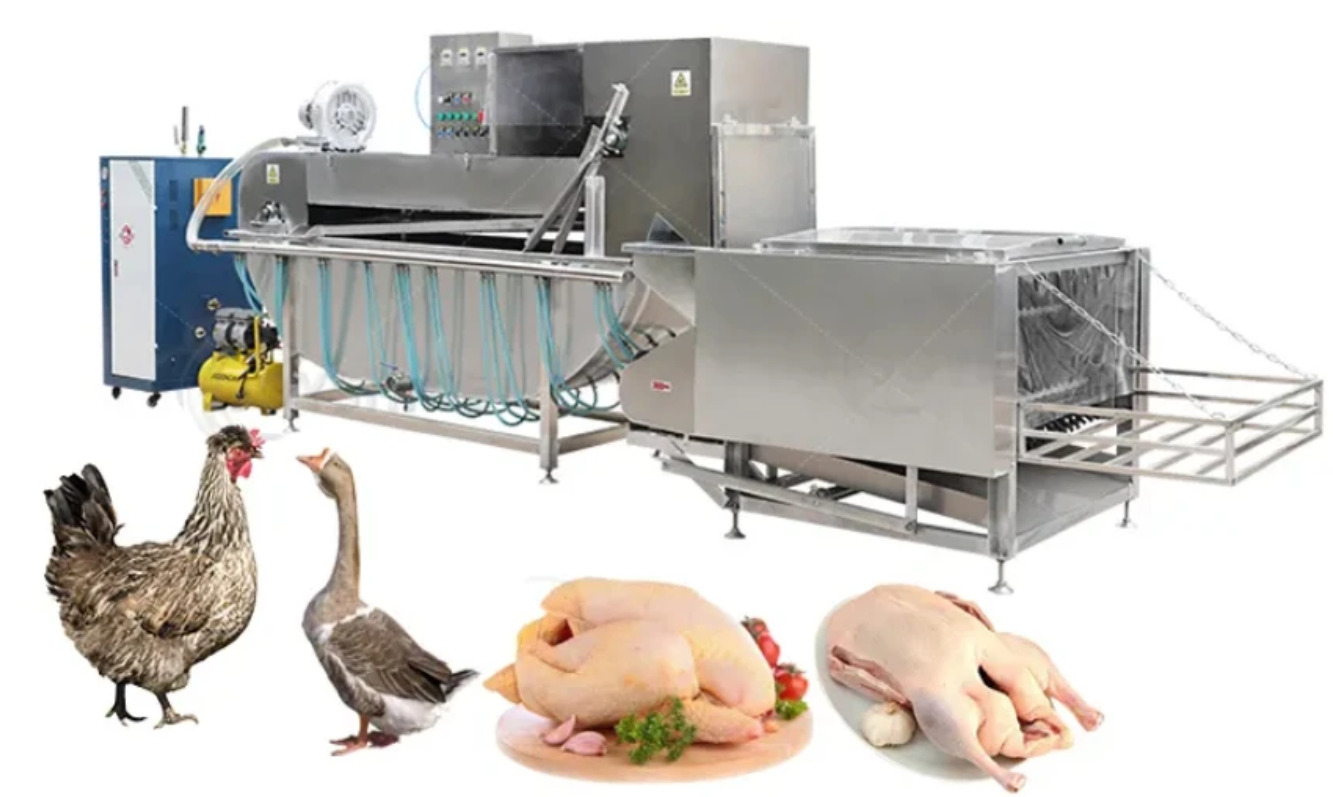
A defeathering contraption is a mechanism devised to extricate feathers from avian carcasses. This apparatus is indispensable in any avian processing venture, expediting the removal of feathers from slaughtered fowl with both swiftness and efficacy. Its implementation can significantly curtail time and labor expenditure, whilst augmenting the caliber of the final product.
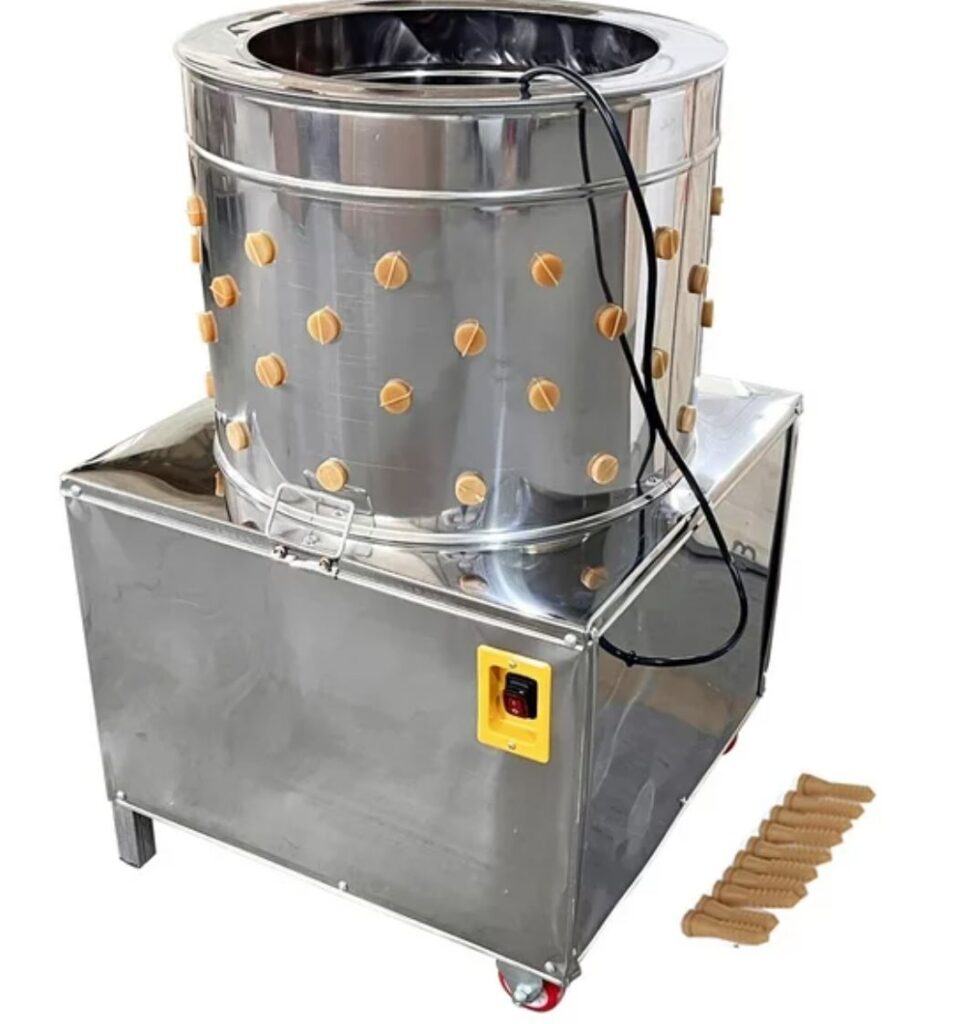
These defeathering machines are typically composed of a revolving drum or basin fitted with rubber appendages that abrade the bird’s epidermis to extricate the feathers. Often, the drum or basin is filled with water to facilitate the loosening of feathers and to prevent them from dispersing.
Varieties of Defeathering
There exist two predominant methodologies for defeathering: dry plucking and wet plucking.
Dry plucking, the conventional technique, entails holding the bird against a revolving drum or disc equipped with rubber or metallic teeth. These teeth grasp the feathers and extricate them, while a suction mechanism withdraws the feathers. Dry plucking is expedient and efficient, causing minimal damage to the bird’s skin. However, it is not universally suitable for all birds and can struggle to remove all feathers.
Alternatively, Wet plucking involves submerging the bird in hot water (145-160 degrees Fahrenheit) for a brief period. The heat softens the feathers, rendering them easier to remove. Following scalding, the bird undergoes dry plucking. Wet plucking proves more effective in feather removal but can damage the bird’s skin. It is also unsuitable for certain poultry breeds whose feathers become particularly tenacious post-scalding.
Types of Defeathering Machines based on Shape
Defeathering machines primarily fall into two categories: Horizontal and Vertical Defeathering machines.
Horizontal Defeathering Machines: These devices feature a horizontal drum into which the birds are placed. The drum rotates, and the rubber fingers strip away the feathers. Typically, horizontal defeathering machines are employed for smaller birds such as chickens and ducks.
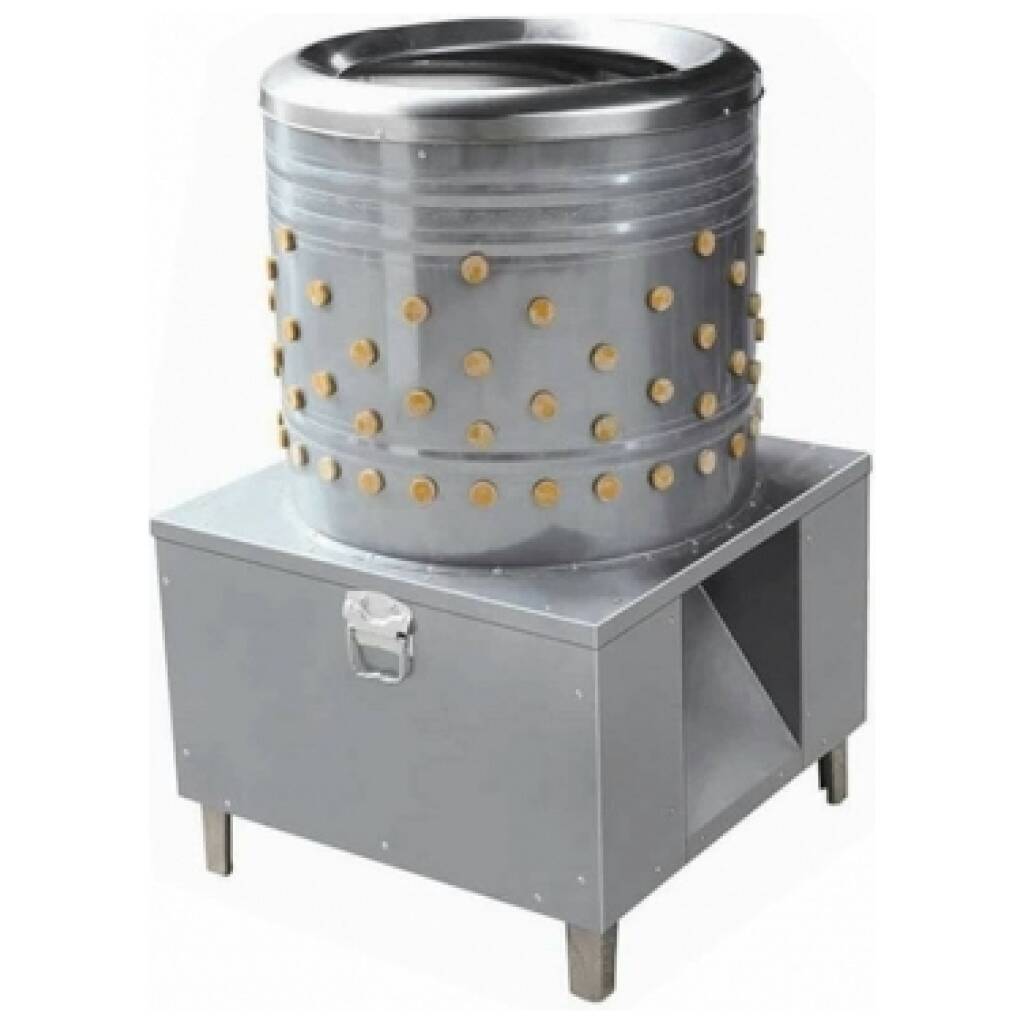
Vertical Defeathering Machines: These machines have a vertical drum from which the birds are suspended. The rotating drum and rubber fingers work in tandem to remove the feathers. Vertical defeathering machines are generally used for larger birds like turkeys and geese.
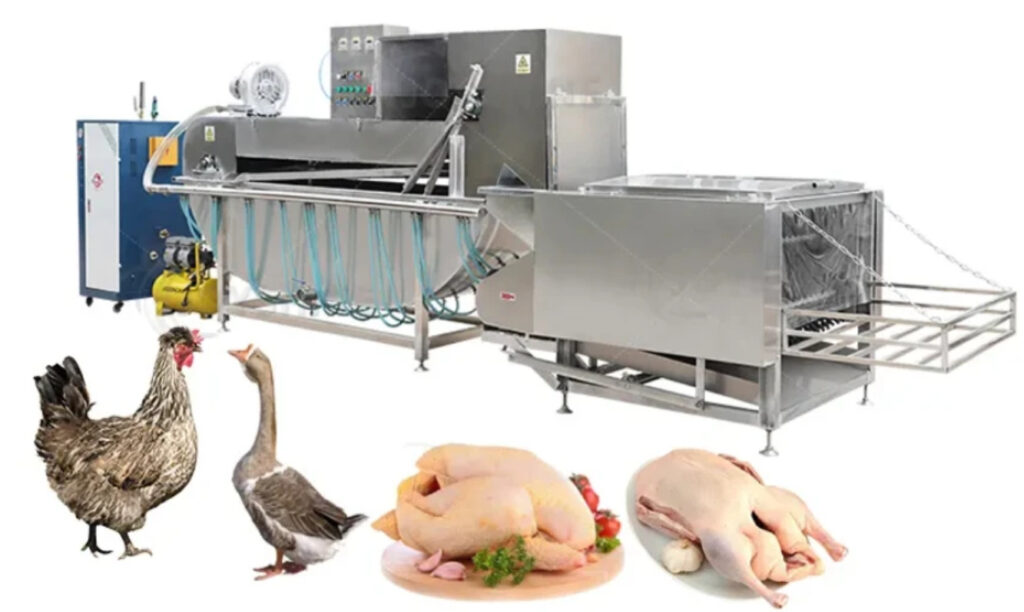
Defeathering machines are versatile, accommodating both wet and dry defeathering methods. Wet defeathering is the predominant approach, as it mitigates feather dispersal and simplifies their removal. Dry defeathering is employed for birds that have been chilled post-slaughter, as feather removal is more challenging when the bird is cold.
Types of Defeathering Machines based on mode of operation
Finger Plucker Machines
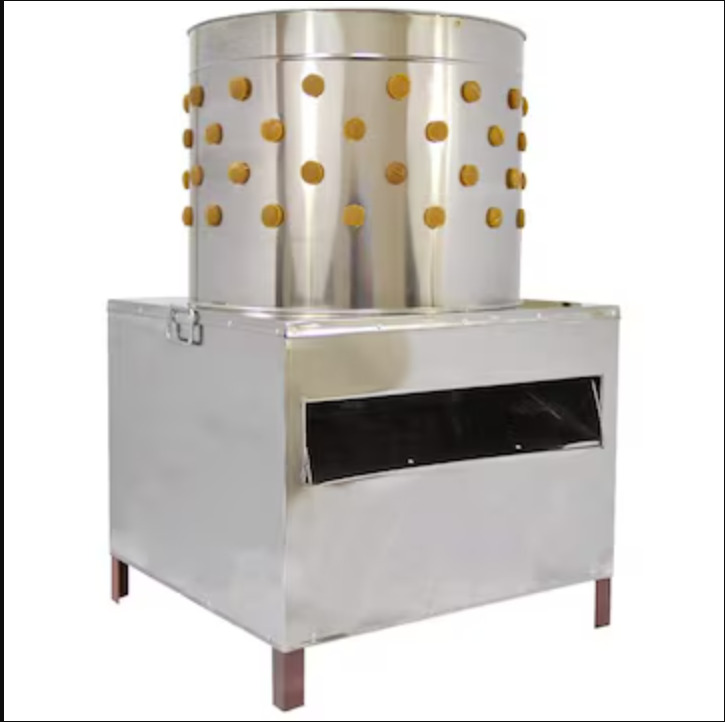
The Finger Plucker-operated defeathering machine, or finger plucker, employs soft rubber appendages to extricate feathers from chickens tenderly. As these rubberized fingers rotate, they adeptly remove the feathers while preserving the integrity of the chicken’s skin. This method is optimal for those seeking a gentle yet effective feather removal process that minimizes skin damage. Electric-powered finger pluckers are available in various sizes, catering to various levels of poultry production.
Rotary Plucker Machines
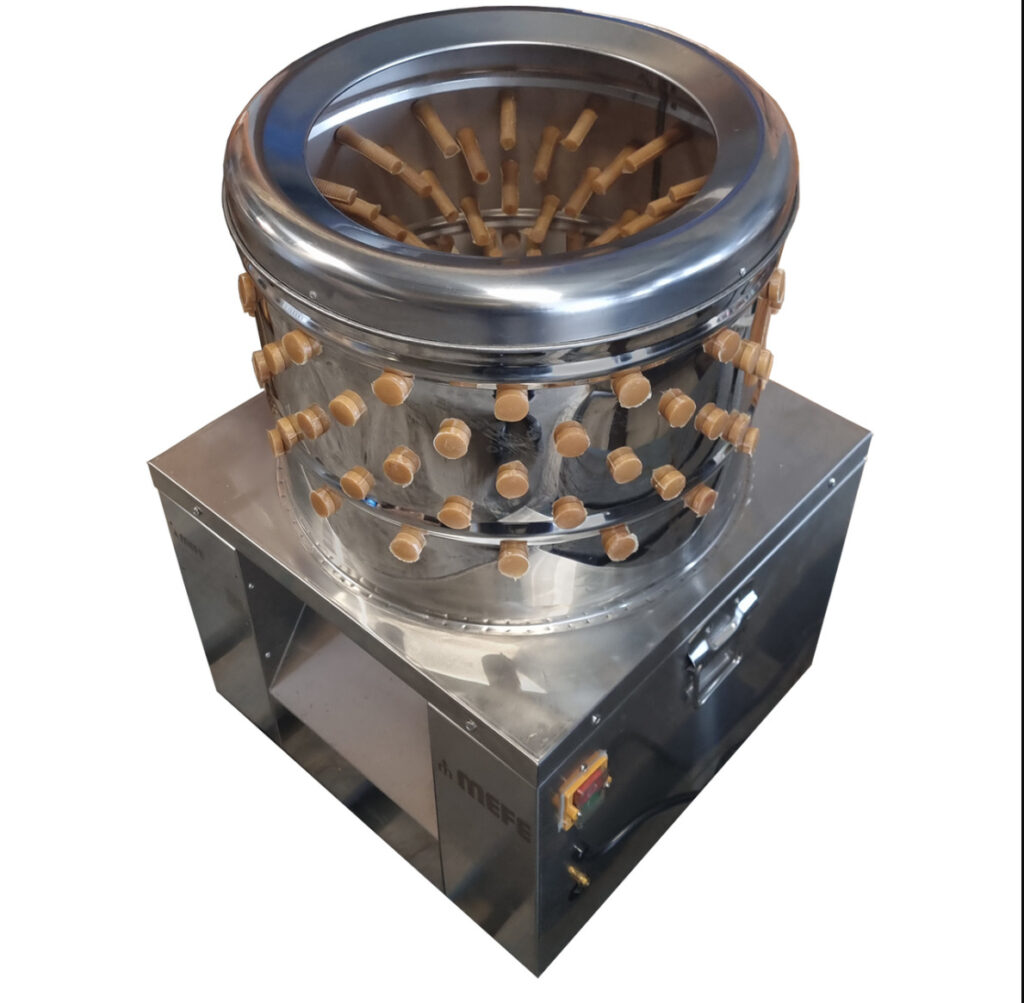
The Rotary Plucker-operated defeathering machine, renowned for its extended service life, utilizes a rotating drum equipped with rubber fingers to remove feathers from chickens meticulously. As the drum spins, these rubber fingers deftly pluck the feathers, ensuring smooth and efficient feather removal. The rotary plucker machine is ideal for operations that require processing a higher volume of chickens. These machines are available in both electric and gas-powered models, with adjustable sizes and speeds to meet diverse processing needs.
Feather Plate Plucker
The chicken feather plucker, known as the feather plate plucker, operates using small rotating plates embedded with rubber fingers to strip feathers from chickens. As the plates spin, the rubber fingers deftly extract the feathers while the bird is pressed against them. This type of machine is suitable for those managing a moderate to high number of chickens. Feather plate pluckers are available in electric or gas-powered variants and are generally straightforward to clean and maintain.
Considerations for Choosing a Defeathering Machine
When selecting a defeathering machine, several factors warrant consideration:
- The scale of Operation: For a small-scale poultry operation, a smaller defeathering machine suffices. Conversely, a larger operation necessitates a more substantial machine.
- Type of Poultry Processed: A machine versatile enough to handle various types of poultry is essential if you process multiple bird species. If your operation focuses on a single type of poultry, a machine tailored for that specific bird is preferable.
- Budget: Defeathering machines range in cost from 400 hundred to as high as 800 thousand in Nigeria, depending on quality and number of birds processed per time. It’s crucial to select a machine that aligns with your budget constraints.
How to Operate a Defeathering Machine
Proper usage of your defeathering machine is imperative to maximize efficiency and prevent damage to the birds.
Here are some guidelines for operating a defeathering machine:
- Always consult the owner’s manual before use.
- Ensure the machine is correctly assembled.
- Adjust the machine’s settings to suit the type of poultry being processed.
- Insert the birds into the machine and allow it to operate.
- Extract the birds once fully de-feathered.
- Clean the machine after each use.
With diligent maintenance and proper care, your defeathering machine will provide enduring service.
Benefits of Using a DeFeathering Machine
Rapid Processing
Defeathering machines significantly reduce the time required to process poultry. Manual plucking is labor-intensive and time-consuming, often taking up to 10-15 minutes per bird. In contrast, defeathering machines can process multiple birds in mere minutes, drastically increasing throughput and allowing farmers to handle larger volumes of poultry without compromising quality.
Consistency in Output
Manual defeathering can result in inconsistent feather removal, affecting the quality of the final product. Defeathering machines ensure uniformity and thoroughness, removing feathers consistently across all birds processed. This consistency enhances the overall appearance of the poultry, making it more appealing to consumers and markets.
Reduction in Contamination Risks
Manual plucking can introduce contaminants from human contact, posing a risk to food safety. Defeathering machines minimize this risk by automating the process, reducing the need for direct human handling. This automation helps maintain a higher level of hygiene, ensuring that the poultry is safe for consumption.
Easy Cleaning and Maintenance
Modern defeathering machines are designed with hygiene in mind. They are constructed from materials that are easy to clean and sanitize, such as stainless steel. This design facilitates regular cleaning and maintenance, preventing the buildup of bacteria and other pathogens, thereby ensuring compliance with food safety standards.
Labor Cost Savings
One of the most significant advantages of defeathering machines is the reduction in labor costs. By automating the plucking process, poultry farmers can decrease their reliance on manual labor. This reduction not only saves money but also allows labor to be allocated to other critical tasks within the poultry processing operation.
Long-Term Investment
While the initial investment in a defeathering machine can be substantial, the long-term savings and benefits far outweigh the costs. The increased efficiency, reduced labor expenses, and enhanced product quality contribute to a quick return on investment, making defeathering machines a financially sound choice for poultry farmers.
Reduction in Physical Strain
Manual defeathering is physically demanding, often leading to repetitive strain injuries among workers. Defeathering machines alleviate this physical burden, reducing the risk of injuries and enhancing overall workplace safety. This improvement in working conditions can lead to higher employee satisfaction and retention.
Minimizing Exposure to Hazards
Automating the defeathering process minimizes workers’ exposure to sharp feathers and other potential hazards. This reduction in direct contact with poultry during plucking further enhances worker safety, creating a safer and more efficient working environment.
Waste Management
The automation of the defeathering process allows for better management of waste products. Feathers and other by-products can be collected and processed separately, facilitating their use in other industries such as animal feed, fertilizers, and bioenergy. This efficient waste management aligns with sustainable agricultural practices and supports environmental conservation efforts.
Conclusion
Defeathering machines offer numerous benefits that make them indispensable in modern poultry processing. From enhanced efficiency and productivity to improved hygiene and worker safety, these machines provide a comprehensive solution to the challenges faced by poultry farmers. Investing in a defeathering machine not only improves the quality of poultry products but also contributes to long-term profitability and sustainability.
You can get yours easily and securely at Transville Agro.
By integrating defeathering machines into their operations, poultry farmers can achieve higher standards of food safety, reduce costs, and enhance overall productivity. The adoption of this technology represents a significant step forward in the evolution of poultry processing, ensuring that farmers can meet the growing demand for high-quality poultry products efficiently and sustainably.
Discover more from Transville Agro
Subscribe to get the latest posts sent to your email.